
4 Days on the World’s Largest Sand Island, K’gari (formerly Fraser Island)
The ultimate self-drive itinerary of the island
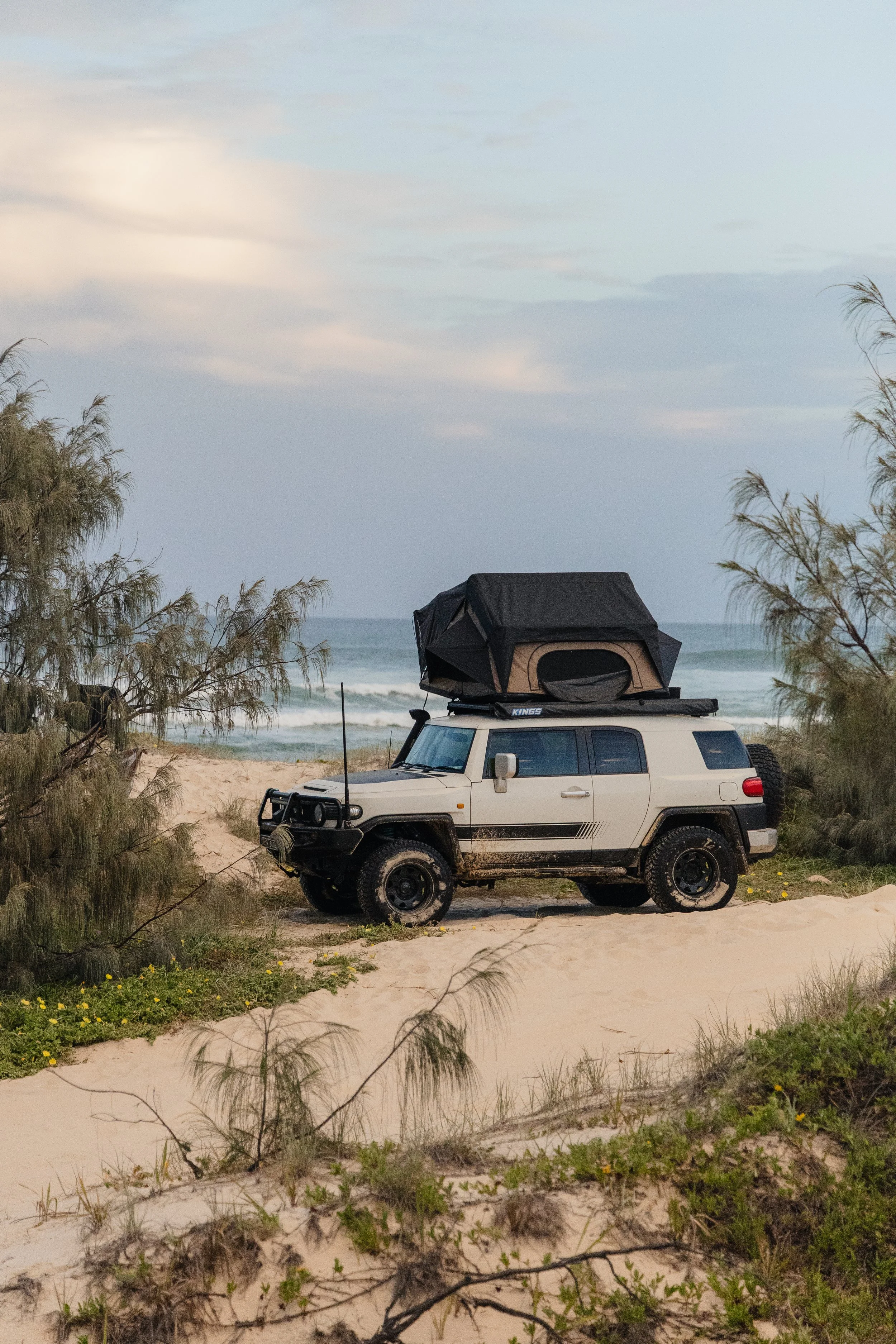
Chances are, if you own a 4WD, you’ve heard of K’gari. Formerly known as Fraser Island, K’gari is a one-of-a-kind Australian bucket-list destination, blending the natural beauty of the Queensland coastline with history, hidden gems off the beaten track and, of course, dingoes.
Our first trip to K’gari in 2023 was a day tour from Hervey Bay, before we owned a 4WD. It was this tour that made us fall absolutely in love with the sense of freedom and the ability to drive the road less paved (literally) — something only a 4WD can tackle. So you can imagine our excitement when we returned to the island two years later with our own car and an adventure-packed self-drive itinerary.
While this itinerary focuses on self-driving, we researched plenty of day and overnight tours on our first visit and would highly recommend the ones below to anyone who would prefer kicking back and letting someone else do the driving (see the ‘Recommended Guided Tours’ section below).
History of the Island
Known as “paradise” in the language of the Butchulla (Badtjala) people, K’gari has been home to the Butchulla people for over 5,000 years. The island’s lakes, middens and scarred trees attest to this ancient life and ongoing connection to Country. European contact in the 18th and 19th centuries brought profound upheaval, following the island’s renaming after the island shipwreck survivor Eliza Fraser.
For decades thereafter, logging and sand mining scarred parts of the landscape before growing environmental awareness helped protect the land. In 1992, UNESCO World Heritage status was granted for K’gari’s extraordinary ecosystems, from rainforests rising improbably from sand to crystal-clear freshwater lakes. In 2023, the official restoration of the name K’gari marked a powerful step toward recognition and reconciliation. Today, co-management between the Butchulla Aboriginal Corporation and the Queensland Government honours both the island’s natural wonder and its living cultural legacy, inviting visitors to slow down, listen, and tread lightly on this special place.
Your K’gari Adventure Checklist
If you’re planning on driving outside of Kingfisher Bay, make sure you have a capable 4WD. All roads on the island are sand or dirt tracks and cannot be driven in a standard car. Depending on your level of off-road experience, K’gari can be a challenging place to drive, and vehicle issues are not uncommon - we helped a guided tour vehicle with an overheating engine within 30 minutes of landing on the island! Make sure you’re well prepared, as a tow off the island can cost over $1,300.
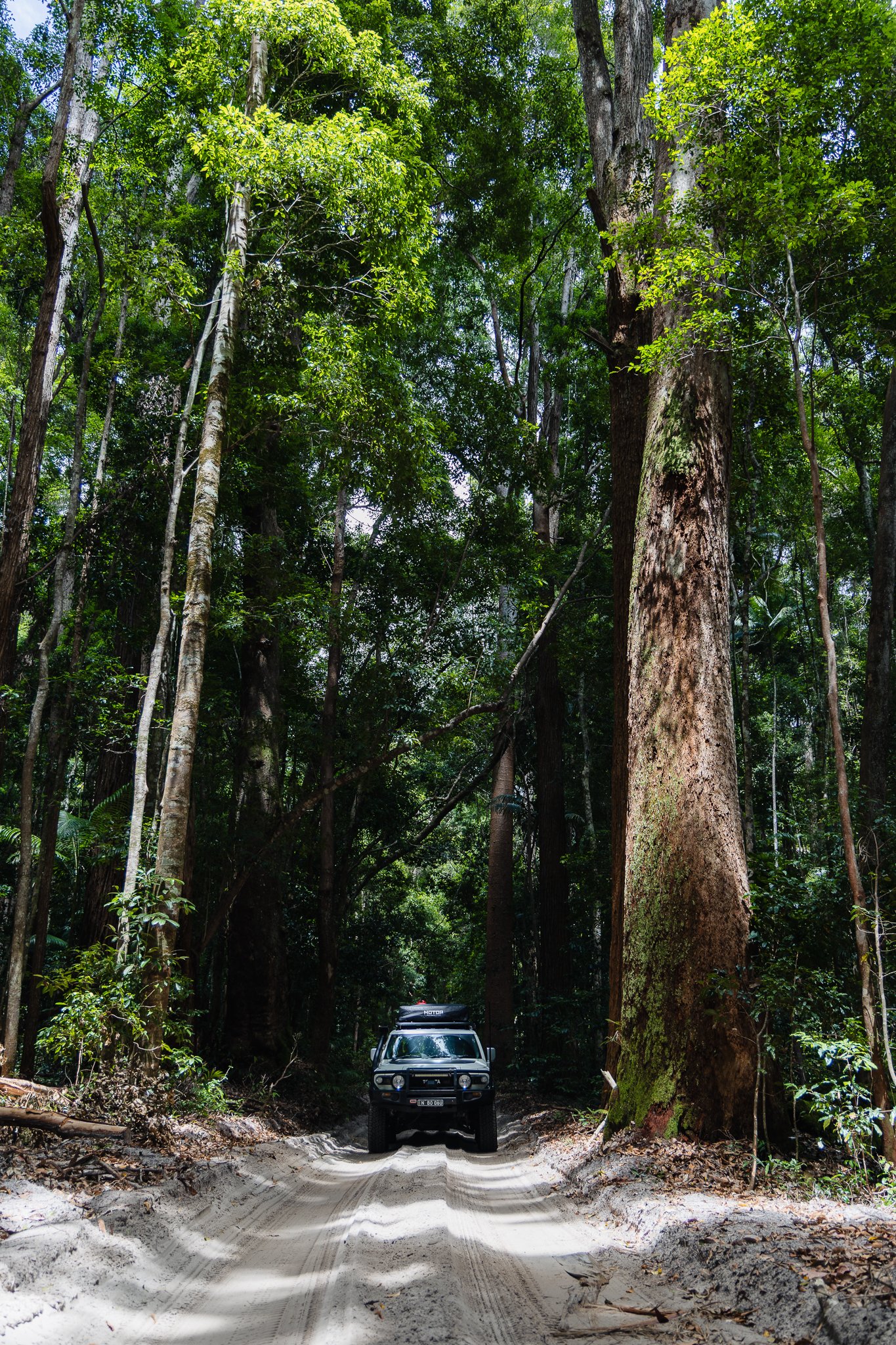
An access permit must be purchased before arriving on the island, as licence plates are checked by hidden surveillance cameras across K’gari (we spotted a few!). You can purchase either a solo K’gari (Fraser Island) vehicle permit or a combined permit for K’gari and Cooloola Recreation Areas. A solo K’gari permit costs $59.80 for one month or less. While you don’t need to display a physical permit, mobile service on the island is extremely limited, so having a printed copy is handy just in case.
Campsites must be booked in advance. Unlike the vehicle access permit, all camping permits must be printed and displayed at your campsite. We stayed in different camping zones each night and displayed our permit in our car window, but if you’re leaving your setup unattended during the day, it’s recommended to place your permit on your tent to avoid a fine.
Campsite fees are $7.50 per person per night or $30 per family. We’ll share a few of our favourite spots below!
Mainland ferry tickets
Depending on where you’re travelling from, there are two ferry departure points. As we were coming from NSW, we opted for Inskip Point because the journey is shorter, ferries run more frequently, and ticket prices are cheaper.
Inskip Point: Mantaray Barges offers a flexible 4WD return ferry ticket for $140 (including passengers), available to book in advance or on the day. Ferries operate between 6am and 5pm and take about 10 minutes, landing at the southernmost point of the island. As we visited during a busy period, we booked online in advance.
Hot tip: During peak season, allow plenty of time to leave the island. We waited in a queue of vehicles for over 45 minutes to board a return ferry.
River Heads: Sealink operates ferries to Kingfisher Bay, with one-way prices starting from $123 for 4WD vehicles. Services run about hourly, depending on the season, and the crossing takes approximately 45 minutes. This ferry was included in our day tour and offers a beautiful, leisurely journey to the island.
Roadside assistance
Most roadside assistance policies do not cover K’gari, so it’s important to check your policy beforehand. For added peace of mind, Fraser Island Towing offers a roadside assistance package for $150, which includes 24/7 breakdown support and a tow to the mainland for one month from the date of purchase.
Be Dingo Smart
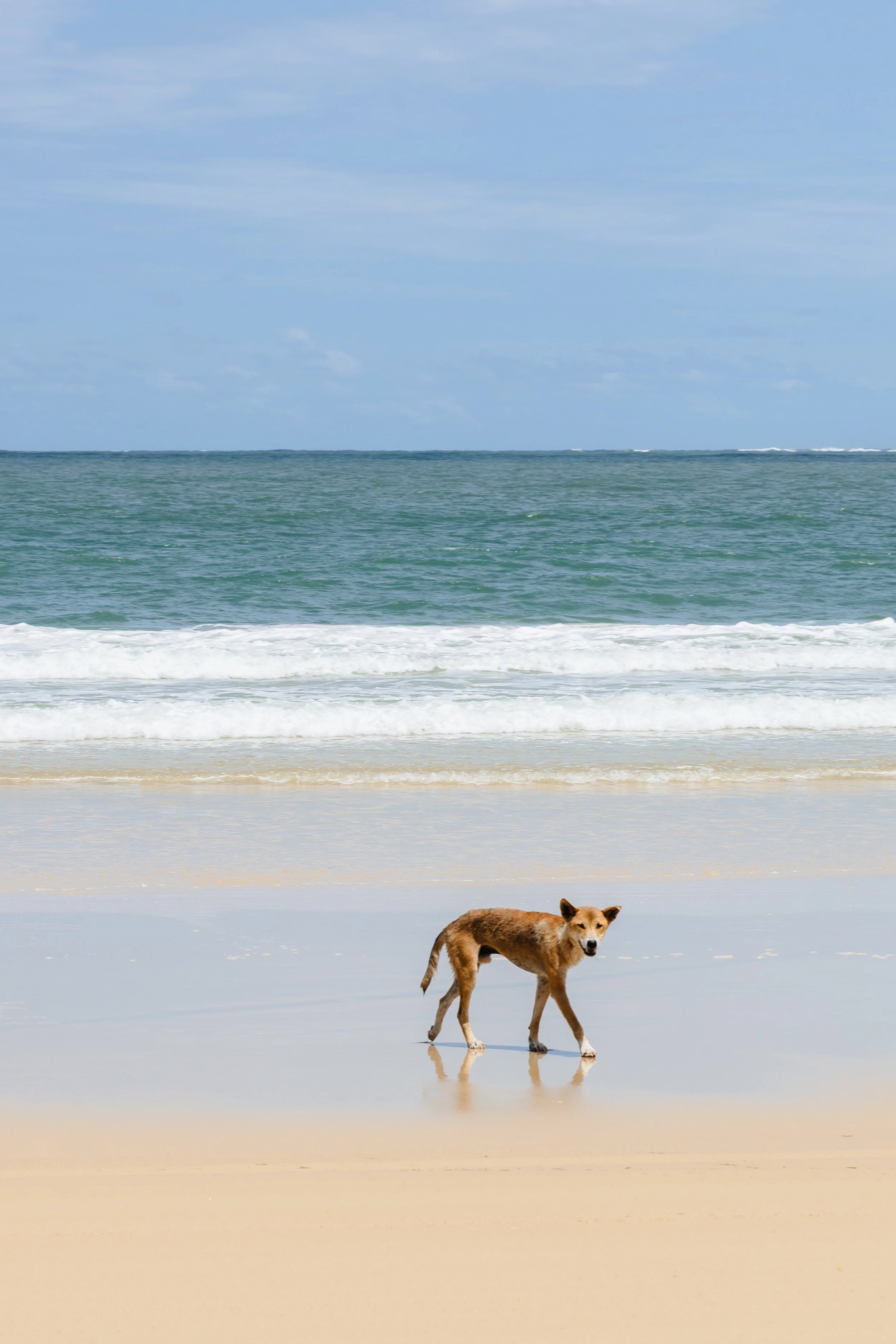
"A Fed Dingo is a Dead Dingo". Do not feed any dingoes on the island, and secure all your food and scraps. Feeding dingoes has been an issue for many years, disrupting their hunting habits and making them dependent on humans. It is illegal to feed them, and doing so can result in serious fines. They may look like domesticated dogs, but they are wild animals, and feeding them ultimately harms them. Enjoy the specialness of these wild dingoes from a distance.
Cell Service: Non-existent
This is worth highlighting, as we didn’t realise quite how limited mobile service would be before arriving. Coverage is almost non-existent across the island, with only patchy reception near Kingfisher Bay. Resort areas offer paid WiFi, with free WiFi available in Eurong. Plan ahead and enjoy the chance to truly go off-grid!
Limited petrol and diesel options
While we love our FJ, she’s definitely not the most fuel-efficient and gulps petrol on the soft sand tracks. We filled a jerry can at Rainbow Beach to avoid island fuel prices, and we were glad we did. At Orchid Beach, ULP 95 was $3.30 per litre, and we even saw $3.40 per litre at Happy Valley.
Fuel is only available at Kingfisher Bay, Eurong, Happy Valley, Cathedrals and Orchid Beach, so plan your refuels carefully.
Our Favourite Beach Camping Areas
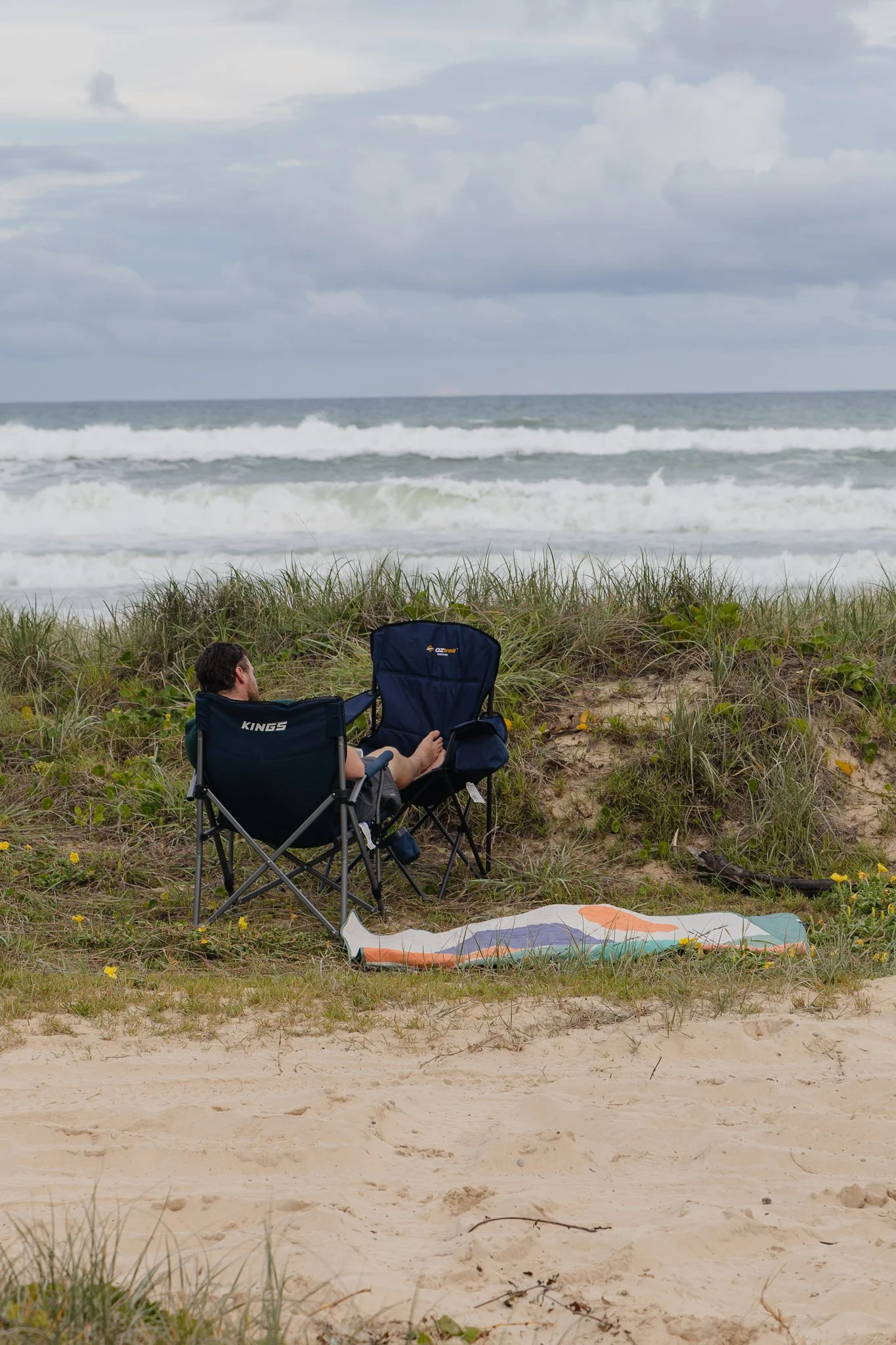
Conveniently located along 75 Mile Beach are nine designated beachfront camping zones, all within easy reach of the island’s major highlights. It’s worth noting that these zones are completely unserviced, yes, that means no toilets, so bring a shovel.
Beach Camping Zone 5 (Maheno)
Closest to Eli Creek and the Maheno Wreck. We camped at the very southern end of the Maheno area, closest to Eli Creek. It had perfectly framed beach views, but we called it the dingo den because many dingoes came up close and personal with our camp. They didn’t bother us; they were just curious, but it was a bit confronting, especially when a four-legged animal lingered while we used the natural toilet.
Beach Camping Zone 2 (One Tree Rocks)
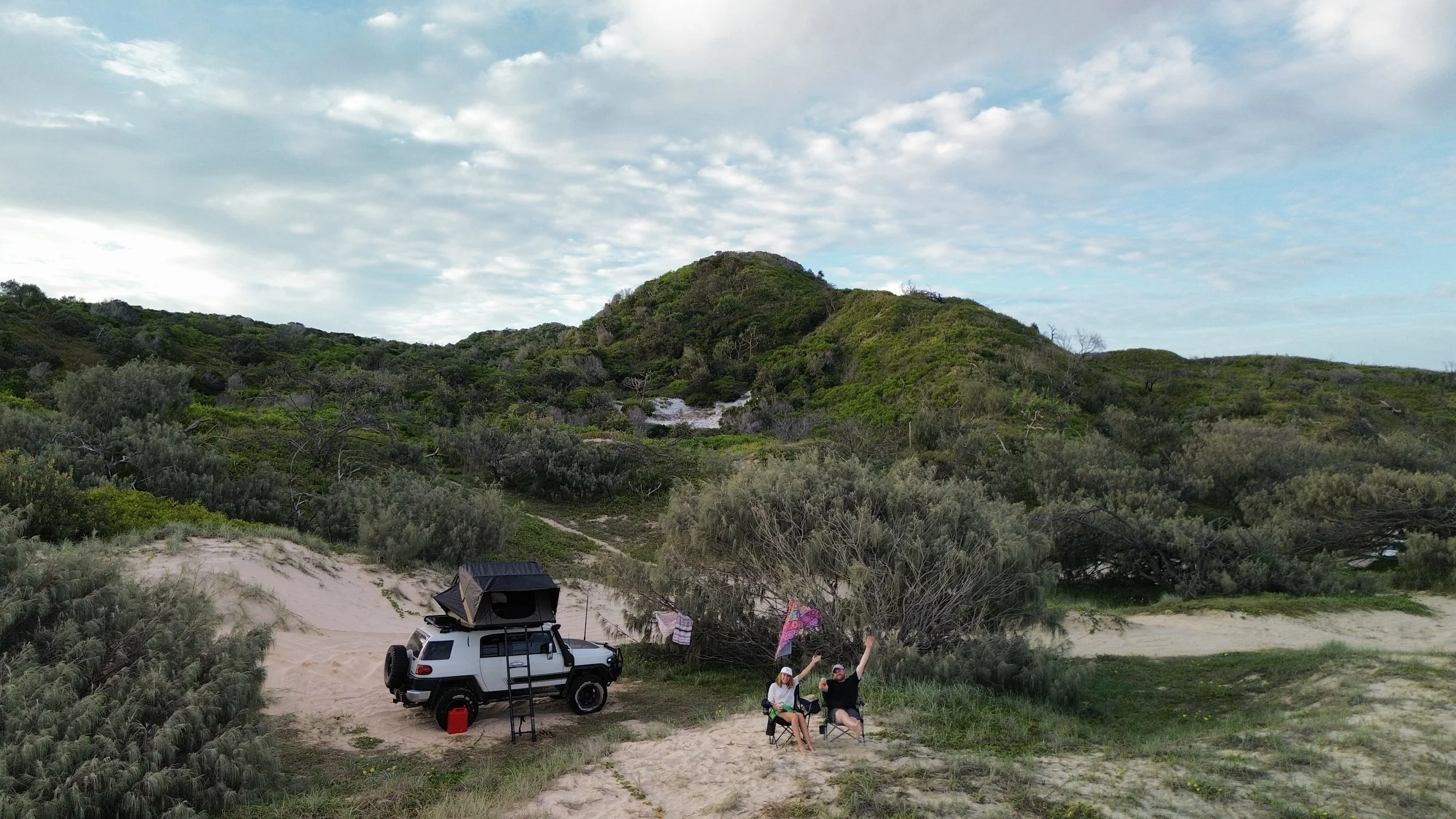
Closest to Eurong, Lake Wabby and Lake McKenzie. We were lucky with our spot here and found an area all to ourselves with uninterrupted ocean views. Watching the sunrise from our bed in the rooftop tent was one of the highlights. Can’t find a more perfect spot with uninterrupted sunrise views from the comfort of your bed!
Must-See Spots
Here are some of our favourite places on K’gari, organised by how we explored the island over four days.
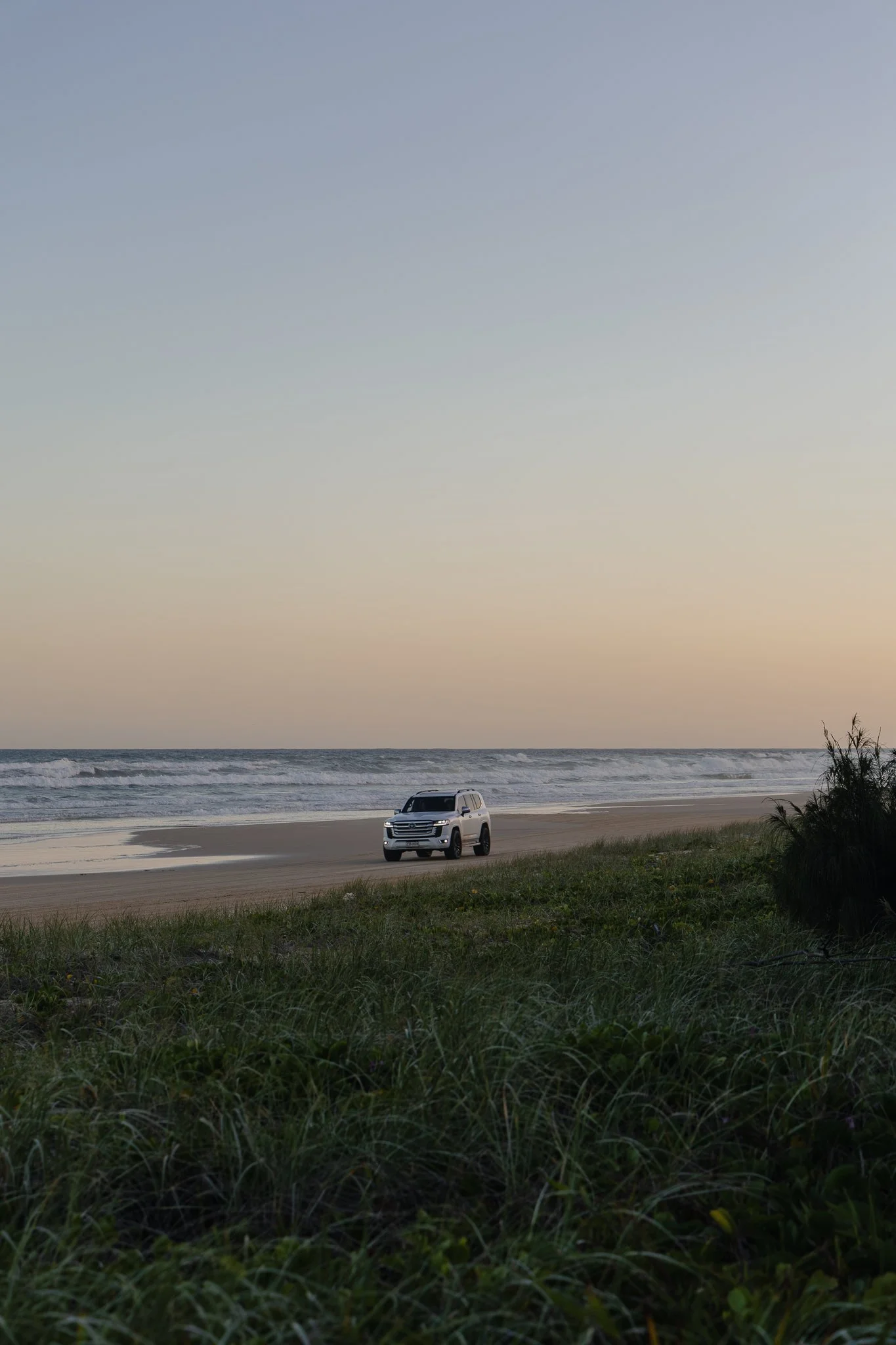
75 Mile Beach at dusk
On our first day, we tackled the Southern Lakes Scenic Drive, stopping at Lake Boomanjin, Lake Birrabeen and Boorangoora (Lake McKenzie) before lunch at Central Station. From there, we headed up 75 Mile Beach to reach our campsite for the night.
Day two was dedicated to the island’s wild east coast. We drove north along 75 Mile Beach, stopping at Ngkala Rocks, Ocean Lake, Champagne Pools, Indian Head and Orchid Beach, before cruising back south to visit the SS Maheno Shipwreck and the colourful cliffs of the Pinnacles. We wrapped up the day with a late-afternoon swim at Eli Creek, which was almost empty at that time of day.
On day three, we explored more of the island’s interior spots, driving the quiet and little-used Lake Garawongera Scenic Drive, stopping by Lake Garawongera and Lake Wabby. On our final morning, we returned to Lake McKenzie early to experience it without the crowds, a completely different place in the soft morning light, before heading back down 75-mile beach to return to the mainland.
Hot tip: Low tide is your best friend when travelling along 75 Mile Beach. We planned our coastal stops around low tide and explored the island’s interior tracks during high tide. You can check current tide times here.
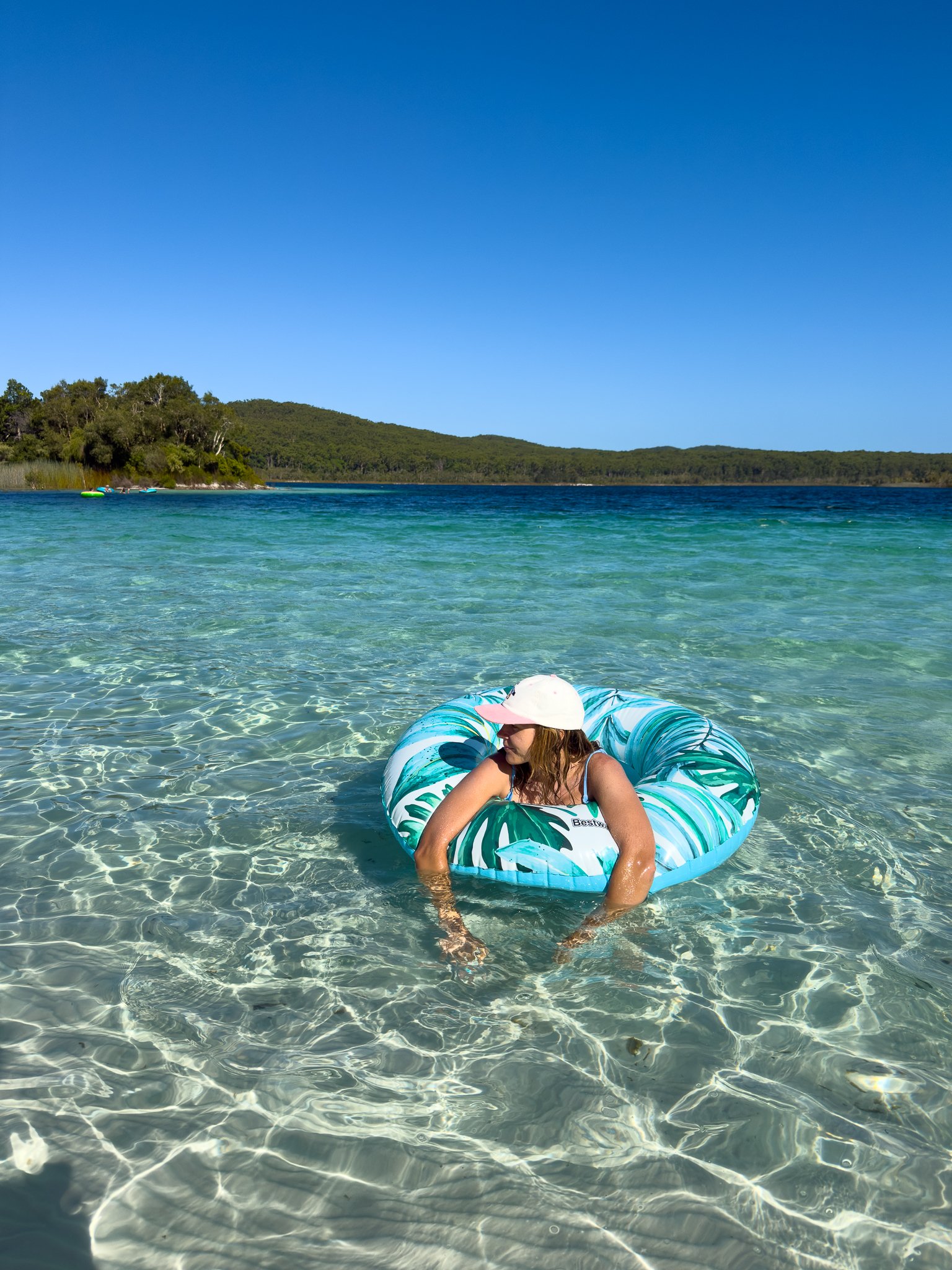
Swims at Boorangoora (Lake McKenzie)
Southern Section
All of these spots are accessed via the Southern Lakes and Central Lakes Scenic Drives.
75 Mile Beach: The island’s main beach highway is an unforgettable drive in itself. Roll the windows down and enjoy the cruise along this pristine natural highway!
Lake Boomanjin: One of the island’s many perched lakes, known for its tea-coloured water stained by surrounding paperbark and perch trees.
Lake Birrabeen: A quieter alternative to Lake McKenzie, with crystal-clear blue water and fewer crowds — perfect for an afternoon swim.
Central Station: The rainforest heart of K’gari, with shaded boardwalks following Wanggoolba Creek.
Boorangoora (Lake McKenzie): The island’s most iconic perched rainwater lake, with blinding white silica sand and water that shifts from turquoise to deep blue.
Hot tip: Visit early in the morning or late afternoon to avoid peak crowds.
Lake Wabby: A rare freshwater "barrage" lake, currently being consumed by the encroaching Hammerstone Sandblow. This emerald green swimming lake, surrounded by towering sand dunes and dense rainforest, is absolutely worth the walk in.
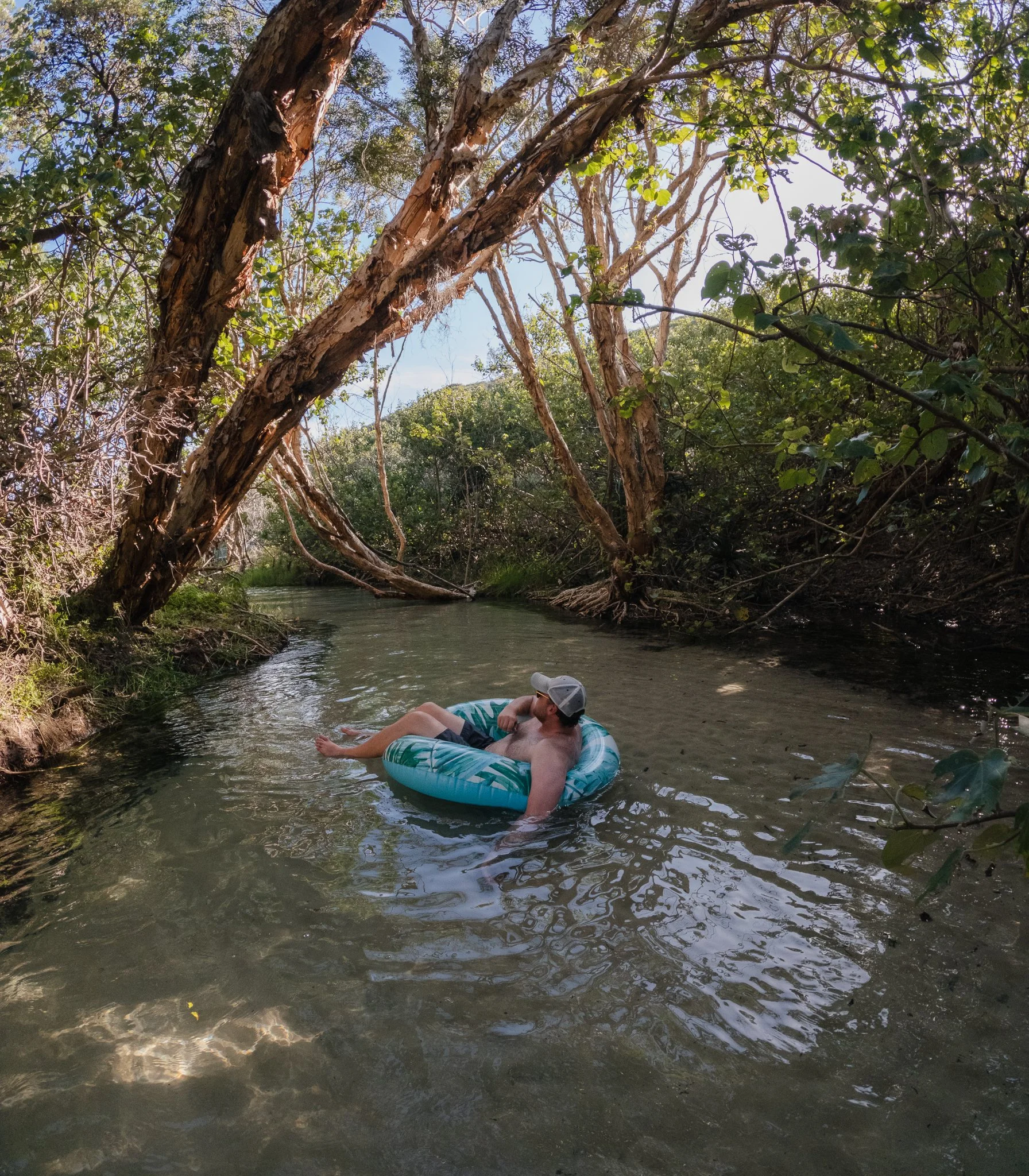
Floats down Eli Creek
Middle Section
Eli Creek: A crystal-clear freshwater stream and the largest freshwater creek on the eastern beach, flowing straight to the ocean, perfect for floating downstream.
Hot tip: Skip the middle of the day. We went in the late afternoon and had the creek almost to ourselves.
SS Maheno Shipwreck: The rusting remains of a former NZ naval ship that’s been stranded on the 75-mile beach since 1935 and is slowly being reclaimed by the elements.
The Pinnacles: Coloured sand cliffs streaked in reds, yellows and whites — best seen in afternoon sunlight.
Lake Garawongera: A reed-lined perched lake hidden along the Lake Garawongera Scenic Drive. We saw only three other vehicles along the entire track and at the car park — a true off-the-beaten-path swim spot.
Northern Section
Champagne Pools: Natural ocean-side rock pools famous for their fizzing, bubbly water caused by waves crashing over a rocky ledge. Offers a rare safe saltwater swimming spot on the island’s east coast. Best to visit during low tide!
Ocean Lake: A calm, freshwater, tea-coloured perched lake suitable for swimming and located in a quiet, scenic area of the island. A lesser-visited spot with a rope swing for lake jumps.
Ngkala Rocks: A notorious stretch of deep, soft sand near the northern end of the island. Even if you don’t plan to tackle it yourself, stopping to watch other vehicles attempt the crossing is entertainment in its own right.
We’ve already started planning our next visit and hope to explore the island’s quieter western side, follow its white-sand creek beds, and finally brave Ngkala Rocks to reach the northern tip of K’gari.
Recommended Guided Tours & 4WD Rentals
Fraser Experience Tours: One-day small group custom guided tours departing from Hervey Bay. We used this tour group for our first trip and would highly recommend it!
Fraser Tours: Whether you’re keen to hire a 4WD and plan your own adventure or join an overnight guided tour of the island, Fraser Tours has a range of options available for your perfect K’gari escape!
Whether you’re planning to drive yourself or prefer to relax while someone else drives, K’gari is a must-see destination in Australia. It offers a rich ecosystem, stunning camping locations, and an opportunity to truly disconnect from everyday life in paradise.
References
UNESCO World Heritage Centre — K’gari (Fraser Island)
https://whc.unesco.org/en/list/630/Queensland Parks — About K’gari
https://parks.qld.gov.au/parks/kgari-fraser/aboutFraser-Tours — Why Is Fraser Island Called K’gari?
https://fraser-tours.com/article/why-is-fraser-island-called-k-gariFraser-Tours — 3 Day K'gari (Fraser Island) Self Drive Itinerary
https://fraser-tours.com/article/3-day-kgari-self-drive-itinerary